
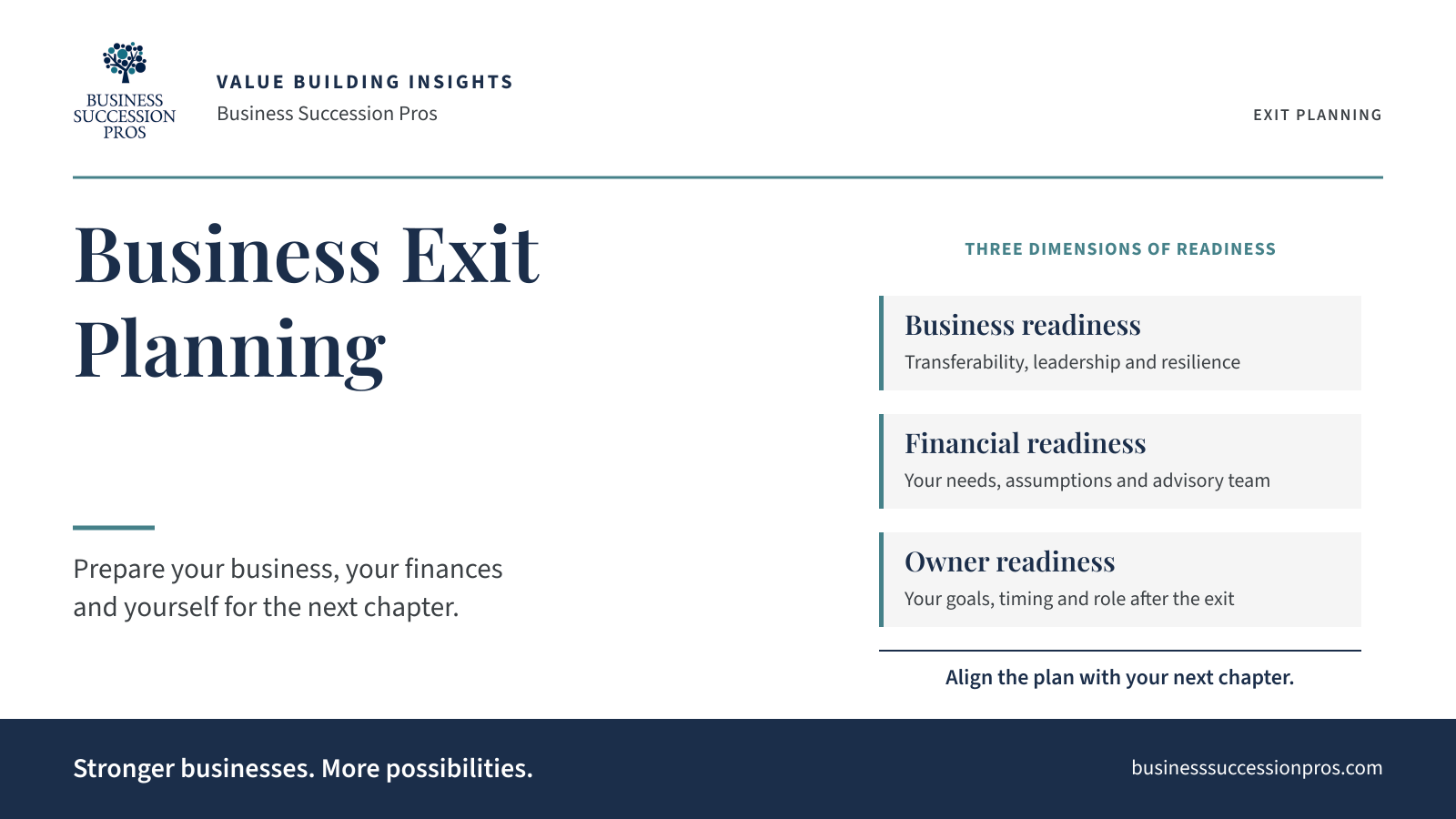
Preparing to exit your business starts with understanding what you want the change to accomplish. A sale price matters, but so do the terms, your responsibilities afterward and the effect on the people who helped build the company.
You can investigate those questions before deciding to sell. Preparation gives you a clearer view of your options and identifies improvements that are useful whether you continue owning the business, transfer it internally or pursue an outside buyer.
This article focuses on preparing for a sale to an outside buyer. A family or employee succession also requires attention to successor readiness and ownership arrangements. The steps below address common preparation needs; the order and depth will depend on your business, goals and timing.
1 Define what a good exit would accomplish
Describe the life and role you want after ownership changes. Would you be willing to stay through a transition? For how long, doing what work and with what authority? How flexible is your timing? What concerns do you have about employees, customers or the company’s identity?
Discuss these questions with the people whose lives would be affected. Separate a temporary need for relief from a decision to leave ownership. Some pressures may be addressed by changing how the business operates rather than selling it.
Start here: Write down your three most important outcomes and the tradeoffs you would consider. Keep unresolved questions visible rather than filling them with assumptions.
2 Understand current value and possible proceeds
Revenue, business value and the money you receive from a sale are different things. Develop an informed view of the company’s current value before using a hoped-for price to plan your future. The U.S. Small Business Administration recommends business valuation before marketing a business to prospective buyers.
Explain the intended use of the valuation to the professional doing the work. Then ask your financial, tax and transaction advisors to help you understand how debt, costs, taxes, payment timing and conditional payments could affect the outcome for you.
Compare that picture with your personal financial objectives. If there is a gap, explore the choices it creates: improve the business, adjust timing, reconsider your expectations or examine another path. A valuation is an input to that discussion, not a promise of an offer.
3 Examine what would continue without you
Look at the company as someone who would have to operate it without your history or relationships. Who can explain how work is priced, how customers are served and how decisions are made? Which responsibilities would still return to you?
Review the concentration of revenue among major customers, the roles of key employees and the reliability of important processes. BDC’s due-diligence guidance identifies customer concentration and the departing owner’s role as issues buyers investigate. Understanding them now helps you choose where preparation matters most.
Start here: Identify one important customer relationship or recurring decision that depends on you. Establish a capable second person with the information and authority to provide continuity.
4 Build reliable records and demonstrate improvement
Organize the information you would need to understand the company yourself: financial statements and tax returns, current results, major contracts, customer information, ownership records, assets, debt and management responsibilities. Ask your advisors which additional records your circumstances require.
Resolve inconsistencies and document explanations for unusual results. If reporting is late, margins are unclear or a recurring service problem remains unresolved, address the underlying issue. A tidy folder cannot establish performance that the business has not achieved.
Give improvements time to produce evidence. Track whether invoices are issued promptly, managers make decisions within their authority and processes work without repeated owner intervention. Keep confidential information protected; organizing it does not mean sharing it with every interested party.
5 Clarify who will advise you and what they will handle
Preparation and transaction execution involve different work. Depending on the business and proposed sale, you may need a valuation professional, accountant, attorney, tax advisor, financial advisor and broker or M&A advisor. One engagement does not automatically cover every role.
Confirm responsibilities, fees and the decisions each professional will help you make. Agree on who coordinates the work so that your personal goals, business preparation and transaction discussions stay connected.
Work with your attorney and transaction advisors on confidentiality and the timing of information sharing. Employee, customer and buyer communications need a considered plan. Avoid promises about future ownership decisions that you cannot control.
6 Decide what needs to be ready before you proceed
Build a preparation plan around the gaps you have identified. For each priority, name the person responsible, the next action, the target date and the evidence you will review. Focus on the issues that most affect your goals and the company’s ability to continue under new ownership.
Your checkpoints might include consistent financial reporting, capable management coverage, a realistic view of possible proceeds and clarity about your preferred transition role. Discuss which conditions need to be met before approaching buyers and which could be addressed later.
Review progress as circumstances change. You may decide to proceed, do more preparation or keep operating the company. Target dates help organize the work; they cannot guarantee a buyer, price or closing date.
7 Prepare for the handover and your own next chapter
Think through what another owner would need to learn and what responsibilities would need to transfer. Identify key relationships, operating knowledge and decisions that deserve a deliberate handover. Test the team’s ability to handle routine work while you still have time to coach and adjust.
Prepare yourself as well. Consider how your time, income, relationships and sense of purpose may change. If you expect to remain involved after the sale, have your advisors help define the proposed role and terms clearly rather than relying on an informal understanding.
What to do in your first month
- Write down what you want an exit to accomplish and which questions remain unresolved.
- Gather current financial information and identify gaps in your understanding of business value and possible proceeds.
- Choose one owner-dependence or operating issue to improve.
- Confirm the advisors you need, assign the next actions and set a review date.
You do not need to put the company on the market to start. The immediate goal is to replace assumptions with information and make the business better prepared for whichever direction you choose.
Frequently asked questions
Does preparing for an exit commit me to selling
No. The work can help you decide whether an outside sale fits your goals. You may choose continued ownership or an internal succession after understanding the alternatives.
Must the business be perfect before I begin
No. Begin with an honest assessment. Discuss material gaps and the available tradeoffs with your advisors rather than assuming every issue must be solved, or that none will matter.
If you would like help prioritizing your preparation, a free, 30-minute Clarity Call with BSP is available.
This article provides general education, not individualized legal, tax or financial advice.